request to quote
Leave Your Message

What Is the Best Glass White Board from China?

Choosing the best Glass White Board from China requires more than comparing prices and photographs. It requires evidence. Grand View Research’s office furniture analysis identifies workplace collaboration as a continuing demand driver, while MarketsandMarkets reports growing adoption of interactive and visual communication tools. These reports do not isolate Glass White Board sales, however. That limitation matters.

David Sibbet, founder of The Grove Consultants International and a recognized visual collaboration expert, said, “Visual language makes thinking visible.” His observation explains why glass boards remain valuable in meeting rooms, classrooms, and design studios. A clean white surface can turn scattered ideas into a visible workflow. Strong contrast helps. So does a smooth writing experience.

China offers broad manufacturing capacity, custom sizing, tempered glass options, ceramic coatings, magnetic surfaces, and export packaging. Yet quality varies sharply between suppliers. A low quotation may conceal weak edge finishing, uneven coating, poor mounting hardware, or incomplete test documentation. Those details become obvious under bright meeting-room lights.

The best Glass White Board should therefore be judged through measurable criteria. Check glass thickness, surface durability, ink erasability, magnetic performance, frame strength, installation instructions, and after-sales support. Request production samples and independent inspection records. ISO 9001 certification can support supplier evaluation, but it does not guarantee product performance. That point is easy to overlook.

This guide compares leading Chinese options through practical use, manufacturing evidence, and buyer risk. It also questions a common assumption: the cheapest board is rarely the best long-term value. My assessment may not fit every project. Room size, writing frequency, budget, and installation conditions still influence the final choice.

What Is the Best Glass White Board from China?

Defining What Makes a Glass Whiteboard the Best

What Is the Best Glass White Board from China?

Defining What Makes a Glass Whiteboard the Best

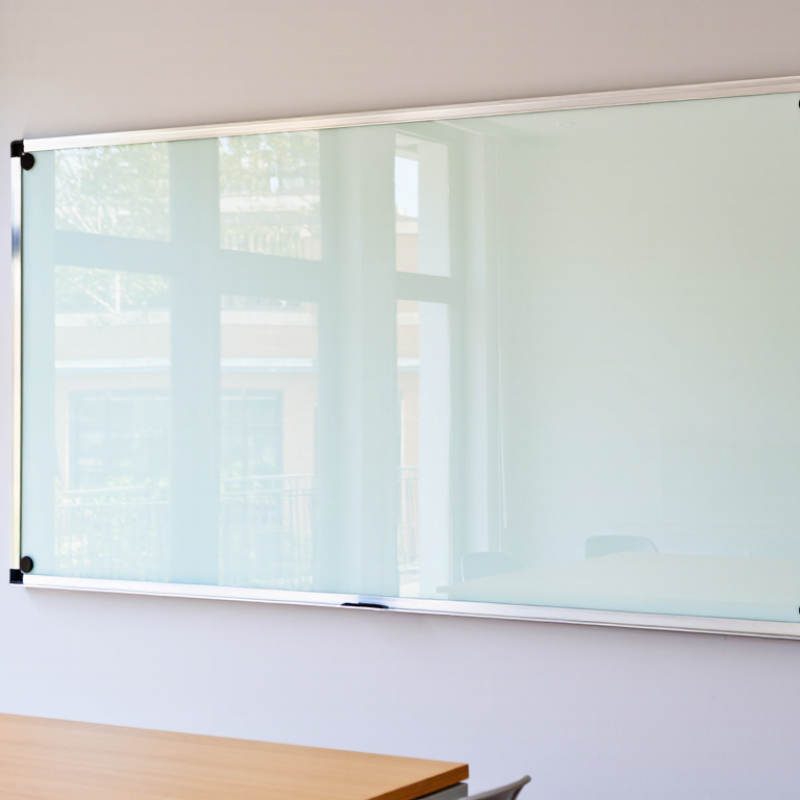
The best glass whiteboard is not simply the brightest or largest model. It should match the room, writing habits, and installation conditions. In practical use, a smooth, non-porous glass surface wipes clean with one dry cloth. It should resist ghosting after repeated use. A 6-millimeter tempered panel often provides a solid balance between durability and weight. Rounded edges matter, especially in busy classrooms and meeting rooms. Small details can prevent daily frustration.

A reliable supplier should explain the glass type, backing material, wall hardware, and tested load capacity. Ask for a physical sample before placing a large order. Write on it with several dry-erase markers, leave the ink overnight, and check the cleaning result. Inspect the corners under bright light. Minor surface flaws may be easier to notice then. Factory experience also matters, including stable cutting, polishing, tempering, and careful packaging. Strong export documentation adds confidence, but paperwork cannot replace product testing.

Visibility is another important measure. A white backing can improve contrast, while a matte finish may reduce reflections near windows. However, some matte coatings can slightly change writing smoothness. This is easy to overlook. Custom sizes, printed grids, magnetic performance, and color options can support different workspaces. Still, customization may increase lead time and inspection requirements. The most dependable choice from China is the one with verified specifications, consistent samples, secure packaging, and honest communication about limitations. No board is perfect. The right one performs well where people actually use it.

Key Materials and Construction Features to Compare

What Is the Best Glass White Board from China?

Key Materials and Construction Features to Compare

When comparing a glass whiteboard from China, start with the glass, not the frame. Low-iron tempered glass gives a cleaner white surface and reduces green edge tint. A 4–6 mm thickness usually feels solid for wall-mounted office use. Ask for tempering records and test samples. Small details matter. The rear coating should be uniform, opaque, and firmly bonded. A weak backing may show shadows, bubbles, or uneven color under bright lights.

Construction quality affects daily writing more than attractive product photos. Check whether the edges are polished smoothly, with no sharp corners or chips. The mounting system should distribute weight across reliable anchors, not a few stressed screws. Aluminum or steel frames need accurate joints and corrosion-resistant finishes. For frameless boards, concealed supports create a cleaner appearance but demand precise installation. I would also compare marker trays, corner protection, and replacement hardware. These parts seem minor until one breaks.

A practical test is simple: write, erase, and inspect the surface after twenty cycles. Use ordinary low-odor markers, then check for ghosting after several minutes. Ask about coating hardness, load capacity, packaging, and replacement procedures in writing. Factory inspection photos help, but physical samples reveal more. Still, samples can mislead. A board may perform well in a showroom yet suffer from rough shipping or poor wall alignment. Request dimensional tolerances and installation instructions before placing a large order. Reliable suppliers answer specific questions consistently, even when the answer is inconvenient.

What Is the Best Glass White Board from China? - Key Materials and Construction Features to Compare

Comparison Dimension Recommended Specification Common Alternative Why It Matters What to Verify with the Supplier
Front Surface Material Tempered float glass with a smooth, non-porous writing surface Standard annealed glass or coated metal sheet Non-porous glass resists ink absorption, staining, ghosting and moisture damage. Glass type, surface treatment, visible defects and cleaning test results
Glass Thickness Approximately 4–6 mm for most wall-mounted boards; thicker glass for large formats 3 mm glass or very thick glass without a structural need Thickness affects rigidity, weight, handling requirements and mounting loads. Actual thickness tolerance, panel weight and maximum recommended dimensions
Safety Treatment Fully tempered safety glass, processed before tempering Annealed glass or laminated glass used without a clear application requirement Tempered glass is stronger than annealed glass and breaks into smaller, less blade-like fragments. Heat-treatment records, safety-glass marking and applicable test documentation
Glass Color and Clarity Optically clear or low-iron glass with a uniform white backing Standard clear glass with a green edge tint Low-iron glass produces a cleaner white appearance and more accurate printed colors. Glass color, edge tint, whiteness uniformity and color consistency between batches
White Backing Layer Uniform, opaque polymer coating or laminated white backing designed for glass boards Inconsistent paint, paper backing or unprotected printed film The backing determines whiteness, opacity, color stability and resistance to delamination. Coating adhesion, UV resistance, humidity resistance and color-change testing
Writing and Erasing Performance Compatible with standard dry-erase markers; clean erasing after repeated use Surface requiring specialty markers or frequent chemical cleaning Good release performance reduces ghosting, maintenance time and total operating cost. Repeated writing/erasing trial, stain test and recommended cleaning products
Edge Finishing Machine-polished, arrissed or radius edges with no sharp exposed corners Cut edges, rough grinding or unprotected corners Proper edge finishing improves handling safety and reduces the risk of edge chipping. Edge profile, corner radius, polish quality and inspection criteria
Structural Backing Rigid aluminum, steel or engineered composite support where required by size Glass mounted without adequate reinforcement A suitable backing helps control flexing and distributes loads across mounting points. Backing material, flatness, load distribution and corrosion protection
Mounting System Mechanical standoffs, cleats or a concealed rail rated for the panel weight Adhesive-only installation or undersized wall anchors Correct hardware improves stability and reduces stress concentrations in the glass. Hardware material, anchor type, installation method and safe working load
Printing and Graphics UV-stable ceramic or protected digital printing, depending on the design Unprotected surface stickers or low-durability solvent printing Protected graphics are less likely to fade, scratch or lift during cleaning. Ink or ceramic system, abrasion resistance, UV exposure and color approval process
Moisture and Corrosion Resistance Sealed backing and corrosion-resistant hardware for humid environments Unsealed edges and untreated steel accessories Protection is important in classrooms, coastal areas, kitchens and other humid locations. Humidity test method, edge sealing, fastener finish and warranty exclusions
Quality Inspection Documented inspection for dimensions, flatness, edges, coating, color and packaging Visual inspection without defined acceptance limits Clear acceptance criteria help maintain consistent quality across production batches. Inspection checklist, sample approval, defect limits and batch traceability
Packaging and Transport Protective film, corner protection, separated panels and a rigid export crate Cardboard-only packaging or panels packed without edge protection Glass is vulnerable to edge impact; packaging quality directly affects delivered condition. Crate construction, internal cushioning, moisture protection and drop-handling procedure
Practical selection rule: For most offices, schools and commercial interiors, a strong specification is 4–6 mm fully tempered glass, a uniform white backing, polished edges, a properly rated mechanical mounting system, and verified dry-erase performance through repeated writing and cleaning tests.

Evaluating Chinese Glass Whiteboard Manufacturers

What Is the Best Glass White Board from China?

Evaluating Chinese Glass Whiteboard Manufacturers

Choosing the best glass white board from China requires more than comparing prices. A reliable manufacturer should provide clear glass specifications, stable quality, and consistent production records. Ask about the glass thickness, edge polishing, coating durability, and writing performance. Tempered glass is generally safer for daily office or classroom use. However, “premium” claims still need evidence.

During evaluation, request product samples and inspect them under strong light. Look for bubbles, uneven color, rough corners, or weak magnetic performance. Ask how the manufacturer tests surface hardness, impact resistance, and color consistency. Experienced suppliers should explain their quality process without vague promises. Production photos, inspection reports, and export experience can also support their claims. Still, documents alone are not enough. I have seen attractive samples differ slightly from larger shipments, so batch control deserves attention.

Tips: Confirm the sample size, frame materials, mounting system, packaging method, and replacement policy before ordering. Test markers, magnets, and cleaning on the actual surface. Keep written specifications. Small details matter. A thoughtful buyer should also question their own assumptions. The cheapest quotation may exclude mounting hardware, protective packaging, or inspection costs. Local communication, response speed, and willingness to correct mistakes often reveal more than a polished catalog.

Comparing Quality, Customization, Safety, and Pricing

What Is the Best Glass White Board from China?

Quality should be judged beyond a spotless surface. Grand View Research estimated the global whiteboard market at about USD 1.3 billion in 2023, with continued growth through 2030. That growth increases supplier choices, but also creates uneven quality. A reliable Chinese manufacturer should provide coating adhesion results, flatness records, and batch inspection photos. In practical use, a good board writes smoothly, erases without shadows, and resists corner chipping. Details matter.

Customization can include 4–6 mm glass thickness, low-iron clarity, rounded corners, printed grids, magnetic backing, and concealed mounting. Ask for a physical sample before approving large production. Printed color may look different under office lighting. I learned this the hard way. A digital proof is not enough. Confirm hole positions, edge polishing, packaging dimensions, and replacement procedures in writing.

Safety requires more than the word “tempered.” ASTM C1048 and EN 12150-1 provide useful references for heat-treated glass. Request test documentation, impact checks, and inspection of every polished edge. The International Energy Agency reports that glass production remains energy-intensive, so pricing can change with energy, freight, thickness, and processing demands. A low quote may exclude wall hardware, export packing, or installation support. Compare the complete delivered cost, not only the board price. Price is not everything.

Selecting the Right Glass Whiteboard for Your Needs

Choosing the right glass whiteboard from China requires more than comparing prices. Start with your working environment. Steelcase’s 2022 Global Report on Hybrid Work found that 87% of employees wanted to work in the office at least part of the time. This supports the need for visible, shared writing surfaces in flexible workplaces.

Check the glass before reviewing decorative features. Tempered glass should have consistent thickness, smooth edges, and a surface that resists ghosting. Ask for test reports covering impact strength, coating adhesion, and chemical resistance. A practical trial matters more than a polished catalog image. Write with your actual markers, then erase the board after several hours. Look closely under side lighting. Small shadows reveal poor cleaning performance.

Size also affects usability. A 1200-by-900-millimeter board suits private meetings, while larger panels support workshops and planning sessions. Confirm the wall structure, mounting hardware, and installation instructions with the supplier. For China sourcing, request factory photographs, sample approval, packaging details, and inspection records. ISO 9001 certification can indicate controlled production, but it does not guarantee every batch is perfect. I once focused too heavily on appearance and overlooked marker compatibility. That was a costly lesson. Ask about replacement parts, delivery protection, and warranty response times before placing an order. A dependable supplier should answer clearly, not only offer the lowest quotation.