+86 152 8002 3723
QVoteProfessional Audience Response System software offers the most convenient functions for your interactions.
QClickThe most convenient educational software for working with Microsoft PowerPoint to quickly set up various question types and generate intelligent feedback reports.
QCameraQCamera by QOMO allows for real-time streaming from cameras and document cameras. Annotate, save snapshots, record, and manipulate camera images instantly.
Flow!Works ProUser - friendly whiteboard software, it encompasses a wide range of presentation tools and powerful functions, delivering the most professional presentation experience to you.
Flow!WorksFlow!Works incorporates more educational tools, further enhancing the interactivity and fun - factor of your teaching.
Conference Microphone● USB
● Plug and Play
● Intelligent Noise-Canceling
● 10ft/3m Extended Pickup Range
● 360° Omnidirectional Pickup
Conference Speakerphone● USB-C
● Plug and Play
● Intelligent Noise-Canceling
● 10ft/3m Extended Pickup Range
● 360° Omnidirectional Pickup
USB External CD/DVD Drive• USB and USB-C
• USB 3.0
• 8x DVD and 24x CD write/read speeds
• Portable
7-Port USB 3.0 Hub● USB 3.0
● Plug and Play
● 7-in-1 USB Hub
● Individual On/Off Switches
Revolutionize Your Presentations and Document Display with QWC 100S Document Camera
Enhance Call Experience: New Conference Microphone Now Available
AI-Powered Face-Tracking Webcam
Portable Document Camera Recommendations
Classic Design, Exceptional Functionality: QPC 22 Document Camera
Wireless Screen Mirroring Solution for All Devices
Latest Audience Response System: QRF 999
Introducing the QPC 80H3 Gooseneck Document Camera
Creating a Smart Integrated Classroom: What Do You Need?
Wireless Connectivity Upgraded: WiFi-Free Wireless Document Receiver
Flow!Works Pro: Interactive Whiteboard Software for Engaging Classrooms
How to Choose the Perfect Document Camera and Elevate Productivity
QWC 004 Conference Webcam: The Top Choice for Remote Education
QCamera: Dedicated Software for Document Cameras to Elevate Your Presentations
QRF999 Voice Response System: Enhancing Teacher-Student Interaction
Work From Home? Maybe You Should Try This Document Camera
The Ultimate Educational Tool: Gooseneck Document Camera
60GHz Millimeter-Wave Wireless Screen Sharing: QShare 100
What Does a Modern Conference Room Need?
QD5000 Document Camera: Unimaginable Versatility!
QWC 004: The Most Cost-Effective Webcam
QVote Interactive Classroom Response System Software
Functionality, Aesthetics, Portability! Meet the QWC 100S Document Camera!
Why Choose the BundleBoard H/H2 Interactive Flat Panel?
Save Your Budget—Introducing the All-New QPC 70 Document Camera!
QIT 600F3: Revolutionize Your Presentations
QCamera: Professional Document Camera Software
QPC 5: The Ultimate 4K Portable Document Camera
Elevate Your Meetings in Seconds: QWC 006 Webcam
Meet QOMO at ISE 2025
Wireless Document Camera Solution, Revolutionizing Wireless Technology
QRF Series, Transform Your Classroom!
QOMO, Building Intelligent Classrooms
QOMO QShare100 New Release
Outstanding Office Equipment Recommendations
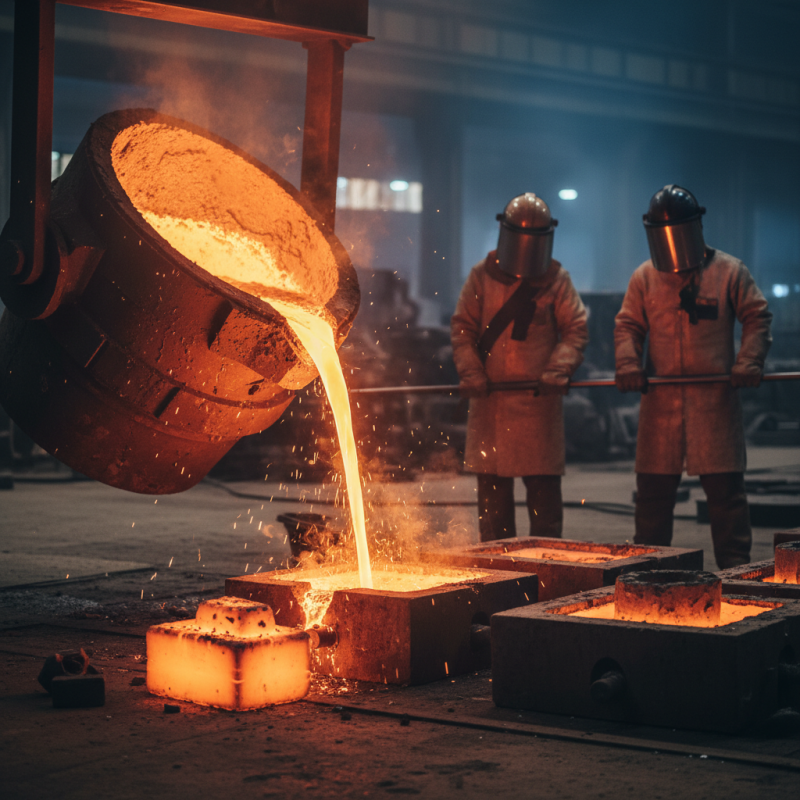
Casting stainless steel is a sophisticated process that demands precision and expertise. Expert John Smith, a well-known metallurgist, once stated, “To truly master cast stainless steel, one must understand its intricate properties.” This reflects the attention to detail necessary for optimal results.
The quality of cast stainless steel relies on the right techniques. Factors such as temperature control and material selection play a crucial role. A slight error can lead to defects, affecting strength and durability. It's important to learn from past mistakes. Sometimes, industry veterans overlook minor details that can cause major failures.
Achieving excellence in casting demands continuous learning and adaptation. Each casting must be treated as a unique challenge. Industry trends and technologies evolve, and so must our approaches. Reflecting on our methods lets us enhance our results and produce superior cast stainless steel components.
The composition of stainless steel significantly impacts its casting performance. Stainless steel is primarily an alloy of iron, chromium, and nickel. The chromium content typically ranges from 10.5% to 30%. This addition enhances corrosion resistance and also affects melting points. Higher chromium levels can complicate the casting process. Nickel provides stability and improves the overall toughness of the material.
Understanding these elements helps in proper casting practices. Different grades of stainless steel yield varying outcomes. For instance, 316 stainless steel contains molybdenum, enhancing pitting resistance. Each alloy's unique properties require specific casting techniques. Temperature control is crucial. Pouring at the wrong temperature can lead to defects. The physical properties often result in unexpected challenges.
Patterns can be complex, too. Designs must consider shrinkage and solidification rates. Sometimes, the final cast does not match the initial design. Experimentation is vital in achieving optimal results. Realizing that adjustments may be needed is important. Proper documentation of trials can help refine the process over time.
Understanding the composition of stainless steel opens the door to better casting practices and results.
Choosing the right casting method for stainless steel can significantly influence the quality and cost of your final product. Investment casting and sand casting are two popular methods, each with unique advantages and drawbacks.
Investment casting, known for its precision, uses a wax template to create molds. According to industry reports, it often achieves dimensional tolerances within ±0.005 inches. However, this method can be more expensive due to labor and material costs. It is ideal for complex shapes and high-quality finishes, making it suitable for intricate components in aerospace and medical applications.
Sand casting offers a more economical option. It uses sand molds, which makes it easier and cheaper to produce larger parts. Still, this method may not provide the same level of detail. Tolerances can be as wide as ±0.020 inches. Thus, it might require additional machining for important applications.
Tip: Evaluate the project's complexity. If intricate designs are needed, invest in investment casting despite higher costs.
Tip: If you're under budget, opt for sand casting. Ensure it meets performance criteria; this could prevent future complications.
Both methods have their merits and can yield excellent products when chosen appropriately. It's essential to weigh the pros and cons before making a decision.
| Casting Method | Material Cost (per kg) | Production Rate (units/hour) | Surface Finish Quality | Dimensional Accuracy | Applications |
|---|---|---|---|---|---|
| Investment Casting | $5.00 | 10-15 | Excellent | High | Aerospace, Medical, Precision Components |
| Sand Casting | $2.50 | 20-30 | Good | Medium | Automotive, General Manufacturing |
When working with stainless steel alloys, temperature control is crucial. Each type of alloy has a specific melting point. This melting point affects the casting quality and mechanical properties. For instance, austenitic stainless steels typically melt between 1400°C and 1450°C. Handling this temperature is challenging, as overheating can lead to oxidation.
One key aspect is ensuring even heating throughout the material. Uneven temperatures can create defects in the final product. Improper control may lead to cracking or porosity. Monitoring temperature closely during the melting process is essential. A thermocouple can help maintain the desired temperature.
The cooling phase also requires attention. Rapid cooling may result in brittle structures, while slow cooling can enhance ductility. Each process step is critical and invites reflection on practices that could be improved. Timing and temperature fluctuations can affect the final integrity of the metal. Over time, perfecting this balance is an ongoing learning opportunity for any craftsman.
Casting stainless steel can be challenging. Numerous defects can arise during the process. Identifying common issues is crucial for producing quality castings. One common defect is porosity. It occurs when gas gets trapped in the metal. To reduce this, ensure proper vacuum conditions during the pouring phase.
Another defect is shrinkage. It happens when the metal cools and solidifies. One effective way to minimize shrinkage is by designing adequate gating systems. This allows molten steel to flow smoothly. Using heat sources to maintain the temperature can also help.
Inadequate mold preparation often leads to surface imperfections. Clean and dry molds are essential. Any residue can create uneven surfaces. Regularly inspecting molds for wear is vital. Addressing these imperfections can lead to more precise castings. The focus should always be on quality over quantity. Continuous reflection on these processes can yield better results over time.
This chart illustrates the distribution of various types of defects encountered during the stainless steel casting process. Understanding these defects can help in implementing better techniques to minimize them and optimize casting results.
Post-casting treatments are critical for enhancing the durability of stainless steel products. Achieving optimal durability requires attention to various methods such as passivation and surface polishing. According to a recent industry report, passivation can reduce corrosion rates by up to 90%. This process removes free iron from the surface, resulting in a passive oxide layer. However, not all passivation processes yield the same results. Some may have inadequate cleaning prior, leading to less effective corrosion resistance.
Surface polishing is another key treatment. By achieving a finer finish, you can enhance the overall appearance and resistance to corrosion. A study indicated that achieving a surface roughness of less than Ra 0.8 micrometers can substantially improve service life. Despite this, many manufacturers overlook the importance of proper polishing techniques. Inconsistent practices may lead to areas of weakness that are prone to failure. Improved finishing processes should be prioritized to ensure that every product can endure challenging environments.
Additionally, heat treatments can also play a role. These treatments alter the microstructure, enhancing mechanical properties. Yet, the parameters need careful consideration. Pushing temperatures too high can lead to brittleness. It's a delicate balance that directly impacts the product’s longevity. Emphasizing refining these processes is essential for better performance in real-world applications.